The Future of AI Cooling How AI is Transforming Thermal Management Solutions
The Future of AI Cooling How AI is Transforming Thermal Management Solutions
The Future of AI Cooling
The combination of thermal management and artificial intelligence (AI) is revolutionizing the way data centers, automotive manufacturing plants, and other industrial facilities operate. As electronic systems continue to become more powerful and compact, there is an increasing demand for thermal solutions that can predict, adapt, and optimize in real time. This transformation is fundamentally changing how manufacturers approach energy efficiency, system reliability, and heat dissipation.
This guide will explore AI-driven thermal management solutions, addressing how predictive algorithms can extend EV battery life, deliver significant ROI (usually 6 – 12 months), and optimize cooling in high-density data centers.

The Growing Challenges of Heat Management
Manufacturing facilities, electronics production, and even commercial buildings are experiencing increased thermal loads as digitization and automation continue to expand. Approximately 2% of the world’s electricity goes to data center operations, with AI cooling systems responsible for a large percentage of their total energy consumption. Additionally, AI workloads with specialized hardware like GPUs and TPUs can draw as much as 1000 watts per chip, creating power densities that often exceed 120 kilowatts per rack.
Thermal management challenges extend to the renewable energy industry, where advanced battery thermal management for electric vehicles is necessary to maintain optimal performance across a wide range of temperatures, from -40°F to desert conditions.
Traditional Thermal Management: The Foundation
Advanced Thermal Management: The Innovation of AI
AI Thermal Management System Architecture and Key Components
The Advantage of using AI to Predict Thermal Behavior?
Traditional Thermal Management: The Foundation
Traditional thermal management solutions use passive cooling methods like heat sinks made from high thermal conductivity materials, and active systems like fans. These methods must manage fluctuating thermal loads, which can lead to energy waste during low demand and overheating during peak times.
Advanced Thermal Management: The Innovation of AI
How Can AI Improve Thermal Management? With intelligent thermal management systems, it becomes possible to analyze vast amounts of sensor data, including temperature, humidity, airflow, and occupancy patterns, to make intelligent cooling decisions. AI-enabled thermal management solutions represent the fastest-growing segment in this broader market, driven by the following factors:
- Increasing power densities in electronic systems
- Rapidly growing demand for energy efficiency
- Expansion of renewable energy systems
- New EV demands for power electronics, cabin climate control, and battery cooling
AI Thermal Management System Architecture and Key Components
AI-driven thermal management systems rely on machine learning algorithms to analyze massive amounts of sensor data. The types of sensor data to make informed cooling decisions includes:
- Temperature
- Flow
- Humidity
- Power
- Pressure
The Advantage of using AI to Predict Thermal Behavior?
The core advantage of AI is its ability to predict thermal behavior, preventing problems before they occur. Instead of reacting to temperature variations after the fact, AI systems can anticipate the thermal load based on equipment characteristics, historical patterns, usage trends, and other factors.
Machine learning models are continuously improving their accuracy by analyzing operational data to create sophisticated thermal management strategies. These systems can identify subtle correlations and patterns that human operators may miss, such as the correlation between internal thermal loads and external weather conditions.
Intelligent Applications Across Industries
Innovative thermal management solutions are becoming available for a diverse range of industries to ensure reliability and efficiency amidst growing challenges.
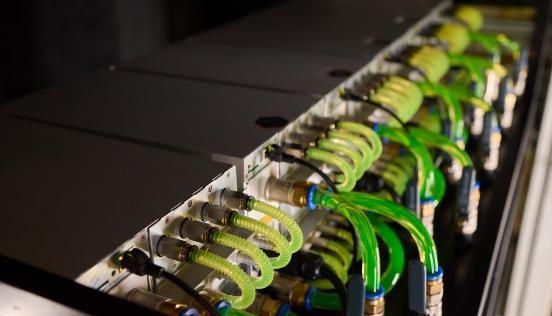
Data Center Optimization
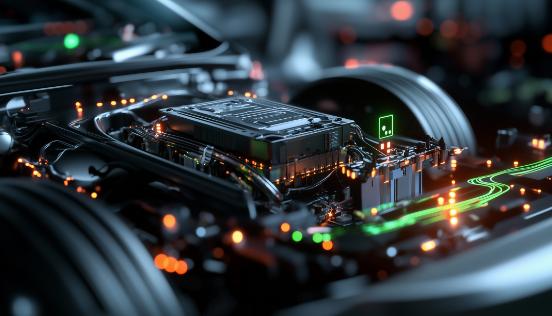
BMS (Battery Management System) Applications
What are the Greatest Benefits of AI-enabled Thermal Management?
AI-enabled thermal management systems can help enhance the performance of systems while reducing energy costs; some data centers are reporting an annual savings of more than $7 million. Equipment can also last up to 35% longer, with the potential to reduce greenhouse gas emissions, as well.
AI-enabled thermal management systems can help enhance the performance of systems while reducing energy costs. In fact, using the thermal solutions that Google DeepMind provides can already save up to 40% of the energy. On the financial perspectives, some data centers are reporting an annual savings of more than $7 million. Also, equipment using advanced TIMs can last up to 35% longer, with the potential to reduce greenhouse gas emissions, as well.
Thanks to real-time optimization, many businesses are experiencing a quick return on their investment, typically within six months to a year. Many utility companies are also offering rebates and incentives that can cover up to one-half of the initial project costs, making a strong case for implementing AI thermal management systems.

The Future Outlook and Emerging Technologies
The convergence of AI with advanced thermal management solutions promises significant breakthroughs in the coming years, with exciting new technologies that include:

Edge computing
Allows for real-time thermal optimization with reduced latency, which is crucial for applications where response times can directly impact overall system performance.

Digital twin technology
Engineers can simulate and predict thermal behavior with unsurpassed accuracy.

Nanotechnology
Enhances heat dissipation capabilities and thermal interface materials as AI algorithms optimize the control and deployment of these materials.

IoT sensors
Integrating IoT sensors with machine learning enables sophisticated control networks and thermal monitoring systems that can manage multi-zone complex environments.

The development of neuromorphic processors and quantum computing creates new and unique thermal management challenges that will demand highly advanced AI cooling solutions. The growth of the 5G infrastructure and edge computing will also drive the demand for high-performance, compact thermal management systems that are adaptable to various computational loads.
How Can T-Global Conquer the Advanced Thermal Challenge?
At T-Global USA, we empower next-generation technologies with advanced cooling solutions such as advanced TIMs, custom thermal modules, vapor chambers, liquid cooling systems, TECs, and graphite– or graphene-based materials. These high-performance products form the foundation of our strategy to tackle the complex thermal demands of AI acceleration, high-density data centers, and other rapidly advancing industries.
We specialize in reliable thermal engineering built on teamwork, trust, and cost efficiency. Beyond manufacturing, we deliver AI-driven thermal management support—combining advanced simulation, testing, and full customization to help engineers predict extreme conditions, prevent thermal failures, and maintain long-term performance.
Contact us to explore the future of AI cooling and discover advanced thermal solutions that balance sustainability, efficiency, and top-tier performance for your next innovation.